How to achieve a lush green lawn in every season with simple, expert tips
Do you want a green lawn? We explore ways in which you can achieve a healthy green lawn that won’t be affected by the constantly changing weather.

Are you looking for a way to increase the health and quality of your lawn without huge amounts of effort? For many gardeners, having a green lawn is the ultimate goal.
While there’s nothing quite like an immaculate green lawn, your grass can be used in all manner of styles. From a highly formal garden to a flower-filled meadow, dotted with daisies, or even just a place to kick a ball. The beauty of a green lawn is that it’s soft and friendly, yet durable and hardwearing. It invites a mood of relaxation and acts as a constant foil for the more showy elements to star.
So what are the best tips for maintaining a green lawn? We explore ways in which you can achieve healthy grass.
How often should I mow for a green lawn?

From May onwards, most plants, including grass, will begin to romp away. For effective lawn care, it’s important to establish a mowing routine. In late spring and summer, every five to seven days is about right for most lawns. At the start and tail of the season, however, (March/April – October/November), the interval between cuts should be greater.
Before the first cut, ensure that all debris is cleared from the lawn. It is also a good idea to gently rake the lawn to lift the grass blades. The first few cuts of the year should only remove the tips of the grass. As the season progresses, you can gradually lower the cutting height. Generally speaking, you are aiming to remove about a third of the growth.
For formal lawns, a height of 13-20mm should be maintained through the summer and at either end of the season, set the mower on a slightly higher setting. Less formal lawns should be cut to a height of about 30mm. Raise the cutting height and reduce mowing frequency in hot, dry weather or risk your green lawn turning brown!
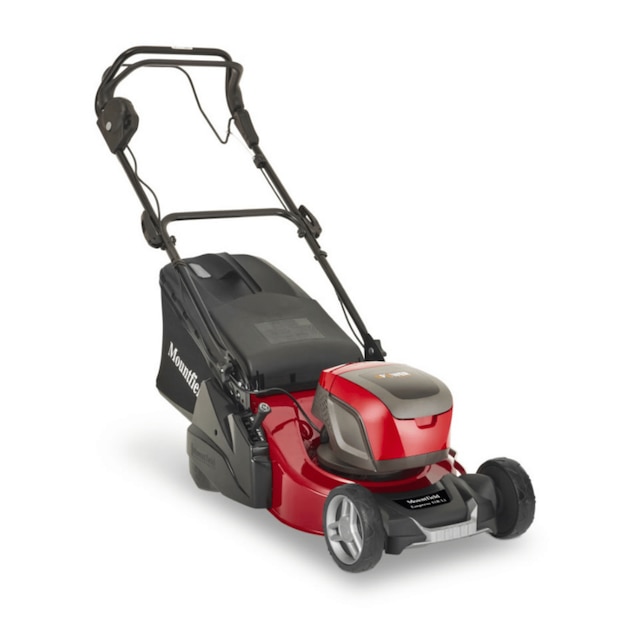
Designed for medium-sized lawns, the model boasts a rear roller to achieve perfect stripes in your lawn and is self-propelled.
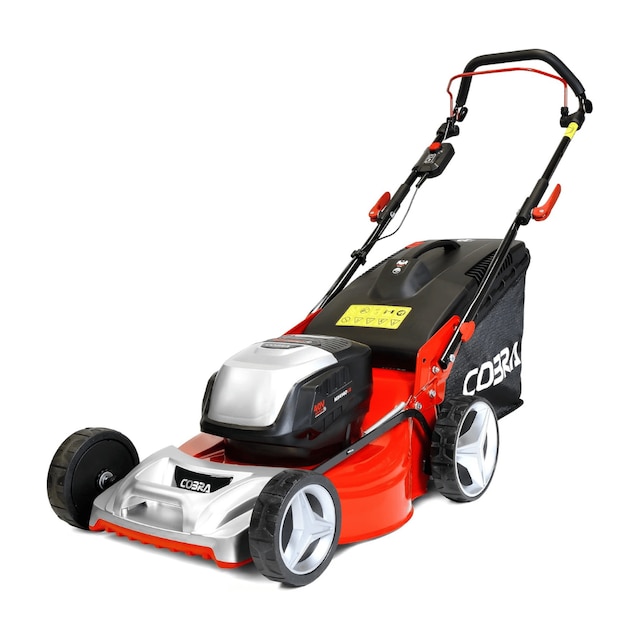
A cordless lawn mower with seven cutting heights, this model has an adjustable handle height and a large 50L grass bag.
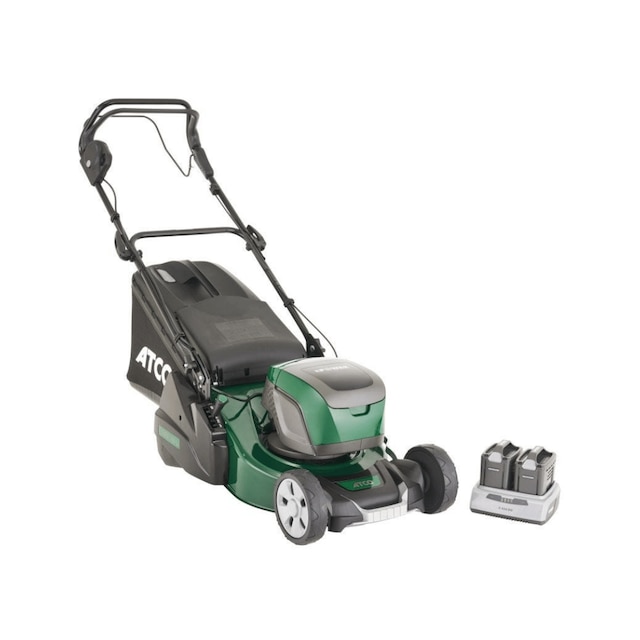
A self-propelled mower, the Acto Liner has a 46cm/18” cutting width and a large 55 litre grass collector.
How do I get the mowing right?

Mowing is one of the most frequent tasks and the most important to achieve a green lawn, and therefore, it is vital to get it right. The quality of the cut will depend not only on your turf type, but also on your choice of mower.
A cylinder mower is fitted with several blades arranged in a spiral located on a front cylinder. The cutting action is similar to that of a pair of scissors, and the more blades fitted, the finer the cut. These mowers are used where an immaculate sward is required. Choose a cylinder mower with a roller if you want to achieve a striped green lawn.
A rotary mower, on the other hand, is more suitable for general mowing of most turf areas. These are fitted with a horizontal blade that spins at high speed and cuts with a similar action to a scythe. Both cylinder and rotary mowers are available as either petrol-driven or electric models. Your choice will come down to budget and suitability. A hover mower is a rotary mower that floats on a cushion of air and is useful for cutting slopes or even steep banks.
Unless you have a mulching mower, it’s best to collect lawn clippings, either during cutting using a box fitted to the mower, or after, by raking them off the surface of the lawn. Over time, if these clippings were left on the lawn, they would cause a buildup of thatch, leading to drainage problems.
With electric mowers, make sure a RCD (Residual Current Device) is fitted. If you accidentally cut through the cable, then the RCD will turn off the power.
Don’t add grass clippings all in one go to the compost heap; instead, mix them with coarse plant material and leaves.
Do I need to water the lawn?

During dry weather, you should raise the height of the cut so that only the tips of the grass are clipped. Allow these clippings to remain on the lawn to help reduce evaporation. Most lawns will recover quite quickly from a period of drought, so to practice the best lawn care, only start watering the lawn when absolutely necessary. Once you begin, you will need to continue at weekly intervals until sufficient rain has fallen.
Use a sprinkler to water in the evening and minimise evaporation, but be sure to apply the right amount of water: too much water is wasteful and too little will cause the roots to come to the surface, so aim to allow the water to soak into a depth of about 10cm.
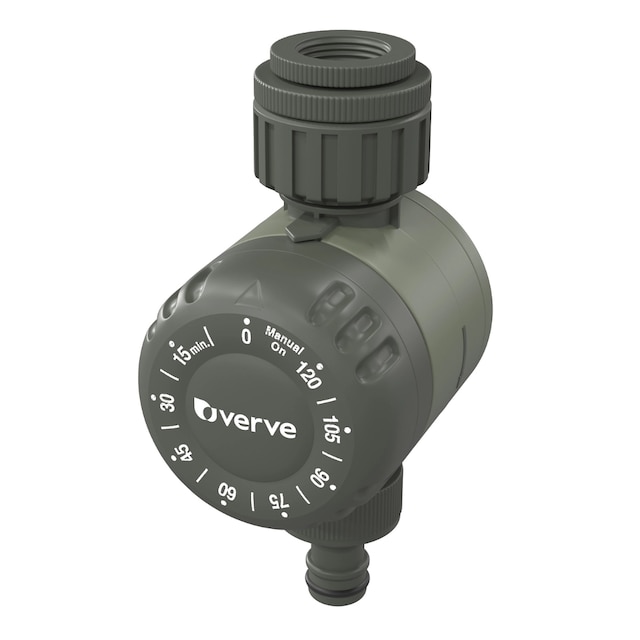
The Verve watering timer will help you to automate your watering system to save water and control the flow for between 3 and 120 minutes.
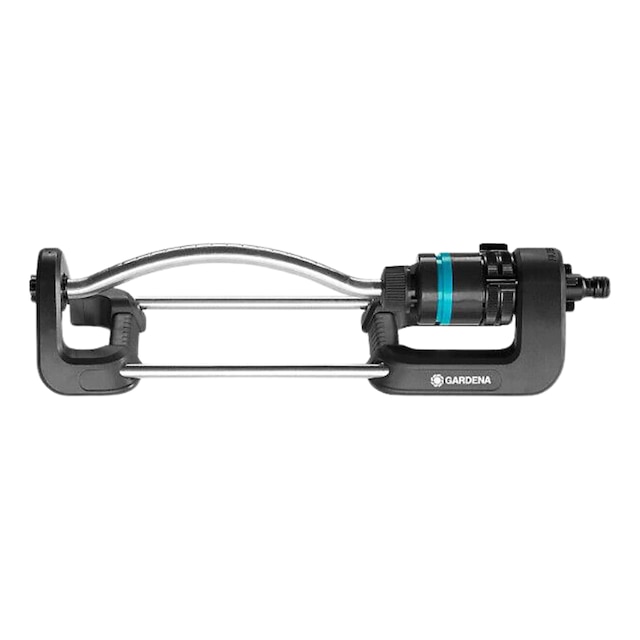
The GARDENA sprinkler has been designed to deliver even watering for rectangular lawns and beds between 90 and 220 m², with a maximum spray width of 13 metres.

Boasting over seven spray patterns, the design has a lockable on/off trigger flow for when watering for long periods of time.
Do I need to feed for a green lawn?
.jpg?imwidth=1440)
For the best chance of getting a lush, green lawn, apply a spring feed just as the grass is starting to grow in March. The fertiliser should contain nitrogen, which encourages strong, healthy growth, as well as potassium, potash and trace elements. Many brands are available, mostly as resin-coated granules, which are easy to apply. The granule coat breaks down gradually, providing the lawn with a constant supply of nutrients without the risk of burning or scorching.
One application should be enough to see the lawn through to the autumn. If during the summer, however, your lawn shows signs of slight yellowing or a loss of vigour, then an application of an organic liquid fertiliser based on seaweed can be applied. You can read more on our expert tips for preparing your lawn for summer.

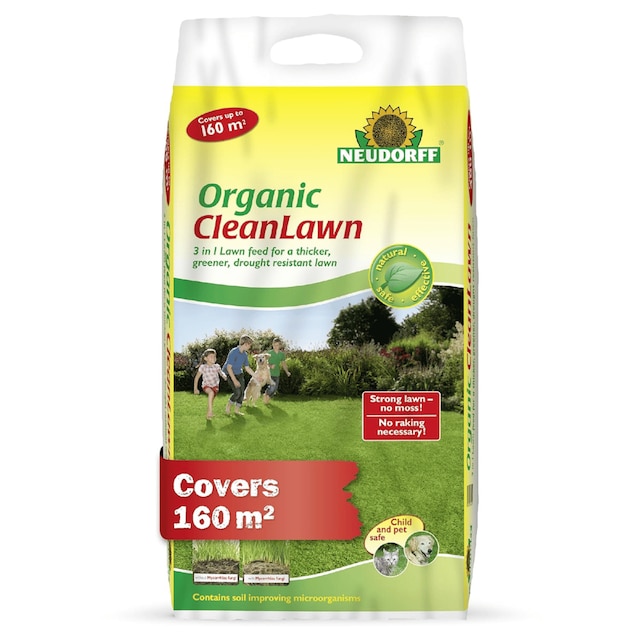
A fast-acting granular fertiliser that encourages the lawn to thicken and green up. Use it from March to June and in September/October, and it will help your lawn’s future drought-resistance, as well as help the grass naturally suppress moss and weeds. It contains naturally occurring mycorrhizal fungi and microorganisms that help the grass roots take up water and nutrients more effectively. Use it from March to June and in September/October.
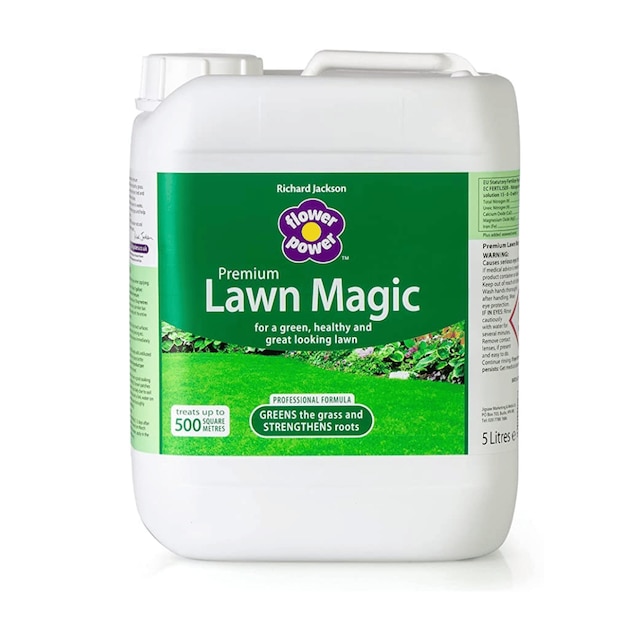
This professional standard lawn fertiliser greens the grass and strengthens the roots, making a lawn that’s strong, healthy, and resilient, especially if it’s in constant use. You’re advised to use it every four to six weeks between March and September, and these regular applications will build a deep green lawn.
How do I get rid of lawn weeds?

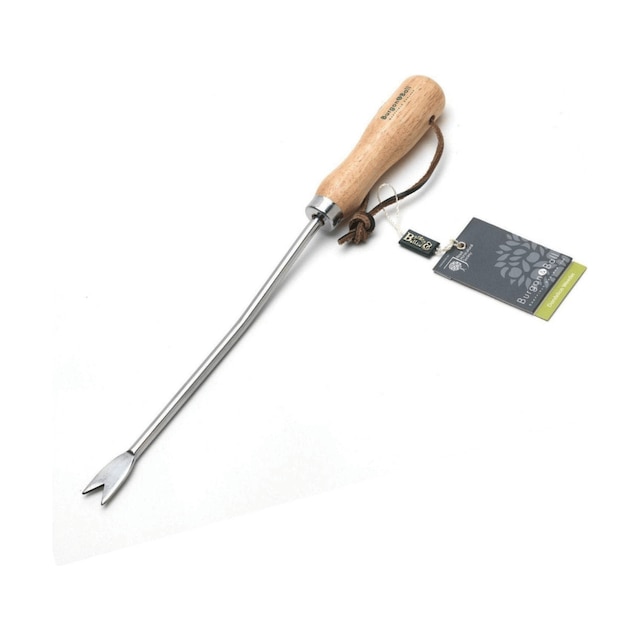
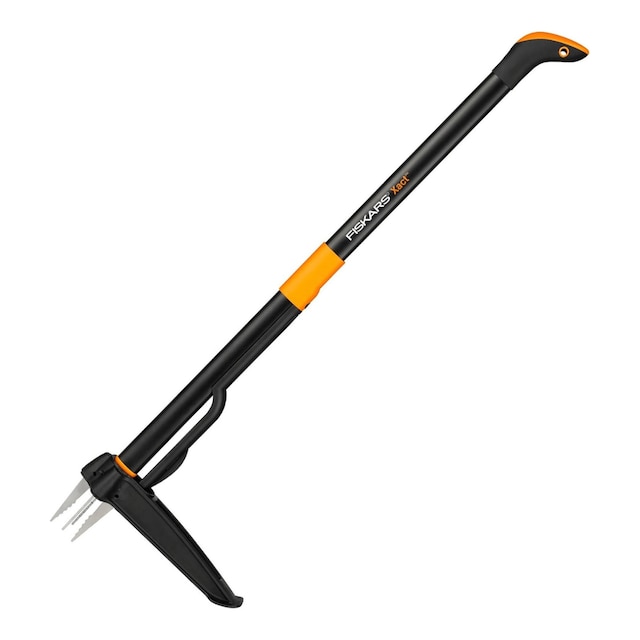
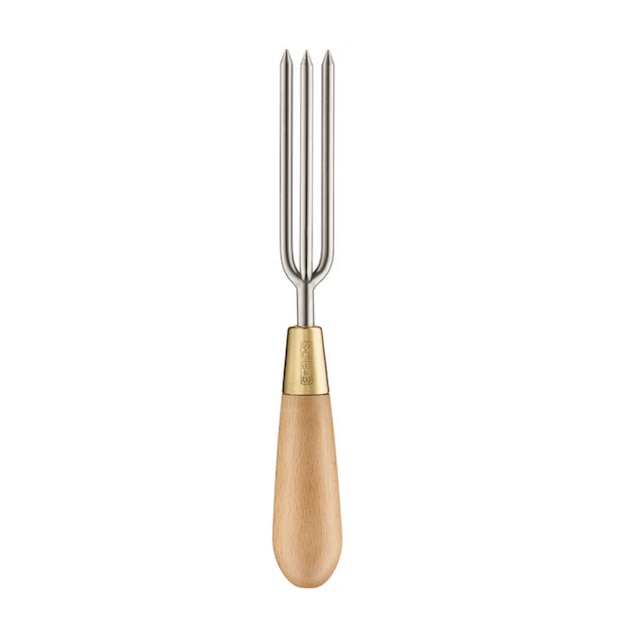
Along with grass, weeds will also be growing quickly during periods of sunny, warm weather. Individual weeds can be dealt with easily by an application of a selective weed killer or alternatively removed using a narrow trowel.
If using liquid chemicals diluted with water, be sure to apply at the recommended dose and always read the label. In essence, apply early in the morning on a calm and moist day. After six weeks, a repeat application may be necessary, particularly for established weeds or those with a creeping habit such as clover. Remember to wash the watering can thoroughly, or better still, have two cans and use one only for chemical application.
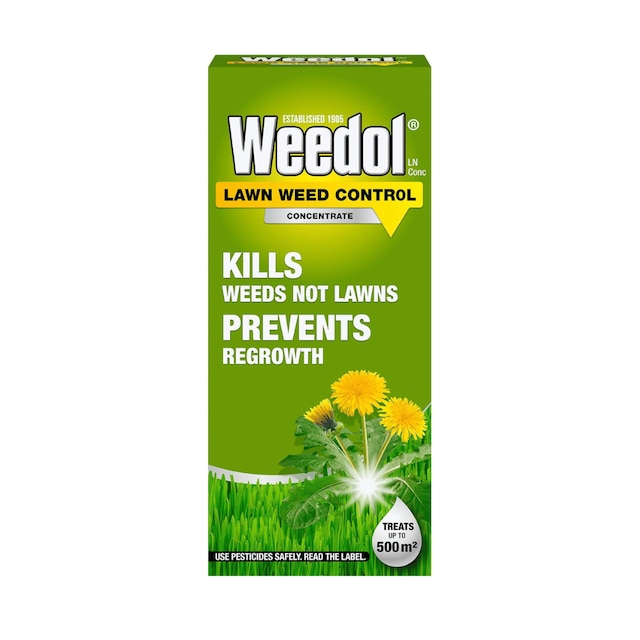
A selective weed killer that targets common lawn weeds such as dandelion, clover, and daisies and prevents their regrowth.
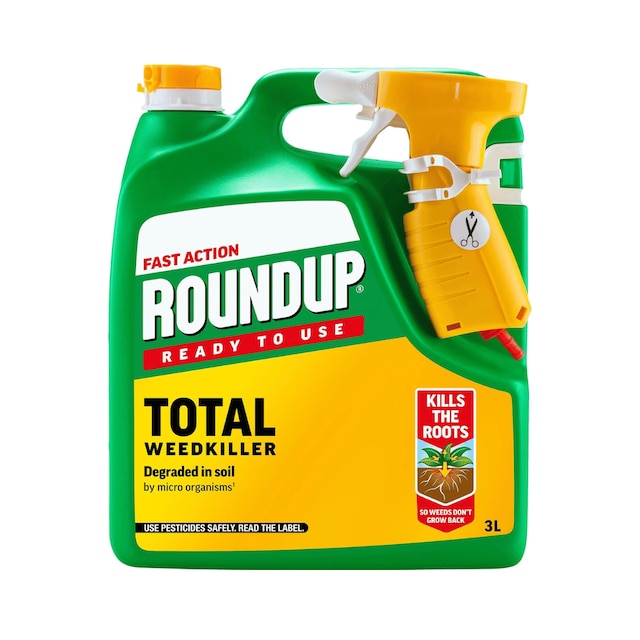
With a handy manual spray nozzle for ease of use, Roundup kills most garden weeds with a single application and is degraded in the soil by microorganisms.
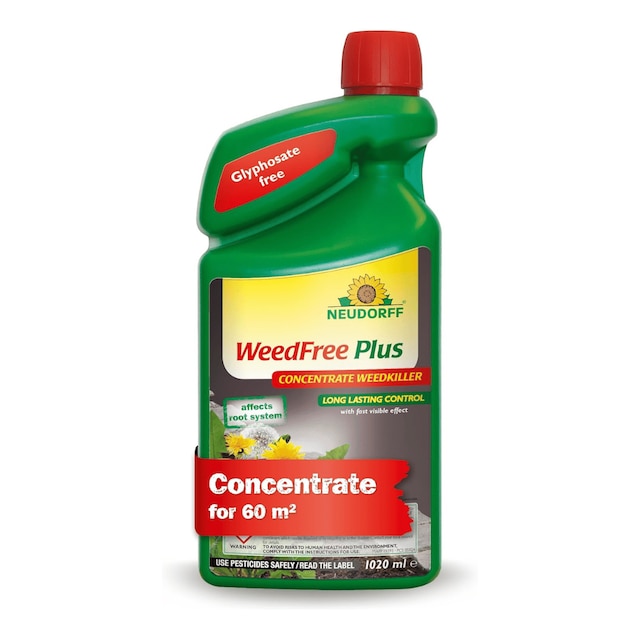
The USP of WeedFree Plus is that it affects the root system of weeds, which destroys weed cell walls and inhibits root growth to stop the regrowth of tough weeds and grasses.
What do I need to do to the lawn in autumn?

It is important to keep on top of lawn care in the autumn months, and one helpful tip is to remove the buildup of dead grass or thatch using a metal-tined rake. The removal of this thatch will reinvigorate the grass, minimising the risk of fungal disease in warm, damp autumns.
Aerating the lawn is an equally important aspect of lawn care, which you can do using a hollow tiner to push down into the lawn about 6cm. Then repeat this action, moving backwards at 15cm intervals over the entire lawn. Creating these slots will enable air to get in, relieving compaction and improving drainage
Areas of bare lawn can be top dressed with old potting compost mixed with grass seed. Brush this in with a stiff birch besom or other broom so that some of the seed is worked into the soil surface.
You can also apply an autumn feed to give the lawn a boost going into winter. Unlike spring fertilisers, which are high in nitrogen, autumn fertilisers are high in potash to encourage root growth rather than leafy growth.
Fallen leaves need to be removed from the lawn surface, or they can suffocate the grass beneath. Instead of raking up fallen leaves, try raising the height on your rotary mower and use it to suck them up. The collected mixture of chopped leaves and grass clippings will be great for the compost heap.
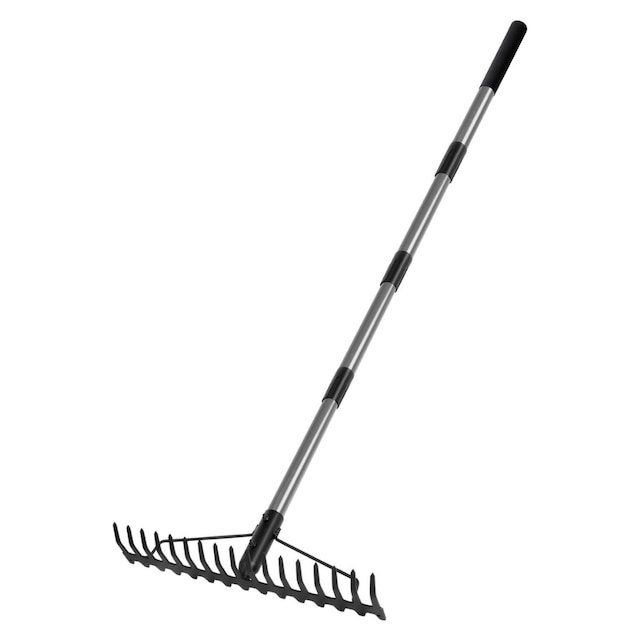
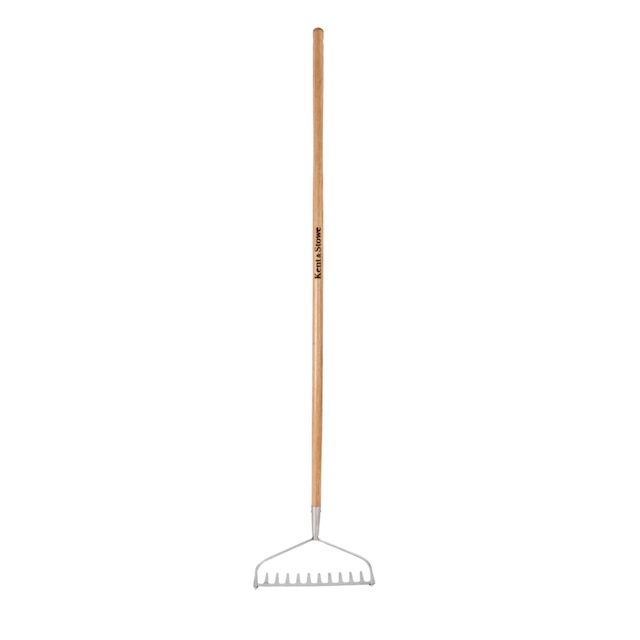
This 17-tine steel rake is heavy-duty enough to tackle thatch and improve the drainage of the lawn.
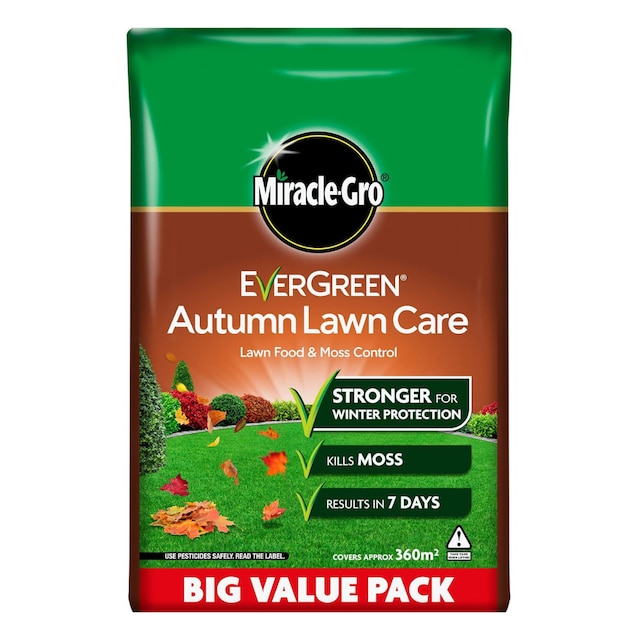
Specially designed for autumn lawn care, this Miracle-Gro feed both strengthens grass roots in time for winter, and kills moss within a week.
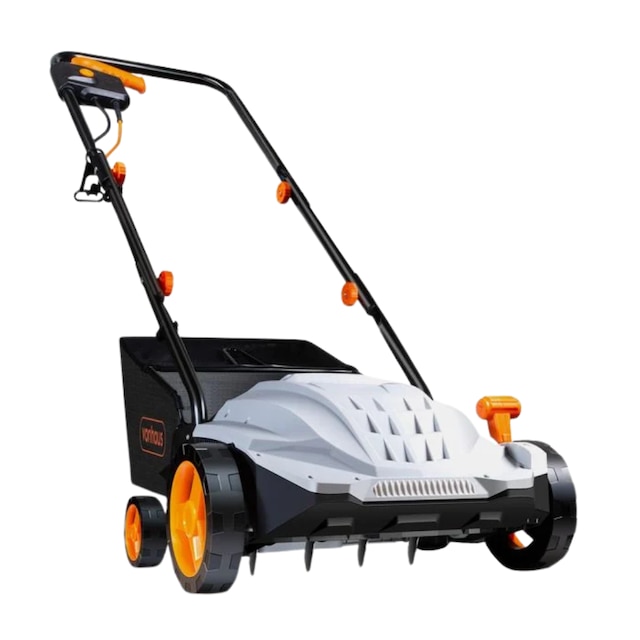
The Vonhaus 1500W 2-in-1 lawn scarifier and aerator is designed for small to medium-sized gardens, and will remove thatch, improve drainage, and help encourage healthier grass.
What if I want a green lawn from scratch?

When sowing a lawn from seed, the intended use and desired look of the lawn will determine the most appropriate seed mix to use. A lawn that needs to withstand heavy wear and some neglect should contain a high proportion of the tough, broad-bladed ryegrass. For a finer, more refined lawn, use a seed mix without ryegrass.
The ideal time to sow seed is September, when the soil is still warm, yet moist, so choose a calm day with light rain forecasted. When sowing, make sure the surface is weeded, raked and level; this is the only opportunity to get it right. When laying a lawn using turves, make sure you get the soil preparation right. It should be cleared of weeds, then forked, raked, firmed and levelled.
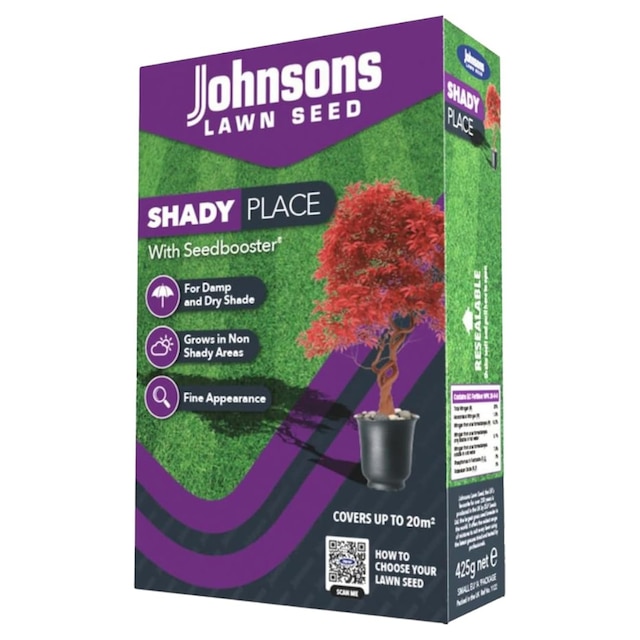
Johnson’s Shady Place grass seed uses grass species that are naturally tolerant of shade for a better chance of a lush green lawn in difficult spots.
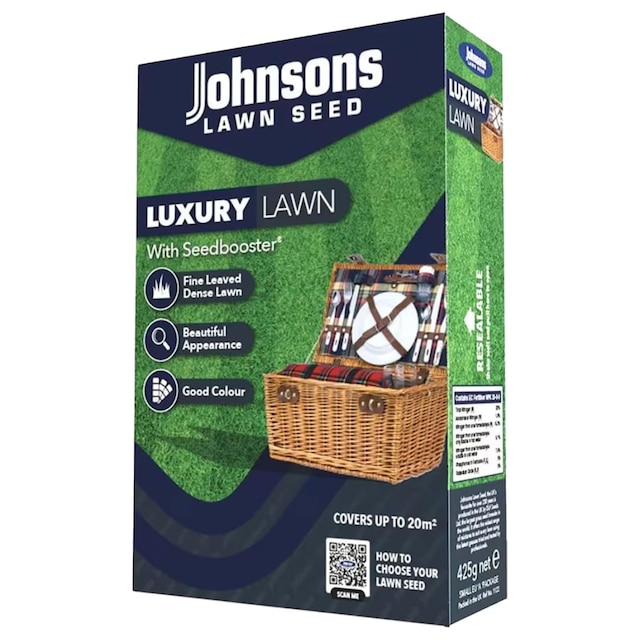
Comprised entirely of fine-bladed bents and fescues, this is the lawn seed to choose if you want a fine, dense ‘bowling green’ lawn, perfect for close mowing and immaculate stripes.
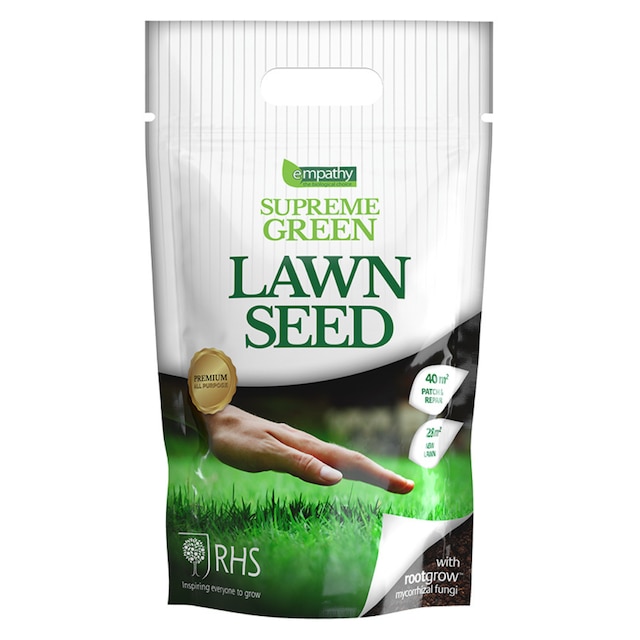
Use Supreme Green Lawn Seed to create a new lawn or overseed bare patches on an existing one. Its blend of grasses has been chosen for natural toughness, and Empathy has added beneficial ‘Rootgrow’ mycorrhizal fungi to the mix, to help the grass establish and increase its ability to take up nutrients from the soil.
Different lawn seed mixes
For a formal lawn – 80% Chewings fescue, 20% Browntop bent
For a utility lawn – 40% Smooth stalked meadow grass, 30% Chewings fescue, 20% Creeping red fescue, 10% Browntop bent
For a tough, hardwearing lawn – 35% Perennial ryegrass, 30% Chewings fescue, 25% Smooth stalked meadow grass, 10% Browntop bent
With these restorative tips for year-round lawn care, you can ensure your grass is thick, thriving and full of life all year round. Sorting out your lawn can seem like a mammoth task, but with regular maintenance, you can keep the time spent tending to your lawn to a minimum, without sacrificing the health of the grass. For a really neat lawn, you also might consider adding lawn edging borders for paths and beds available from Amazon.
More from Maintenance



d010.jpg?imwidth=320&impolicy=utilities-thumbnail)


More from The English Garden



6138.jpg?imwidth=320)